
Breathe Easier at Home with a Well-Cared-For Dehumidifier
A dehumidifier for the home can make a big difference in how your house feels, especially in Michigan. Even when the air outside cools down, basements and lower levels can still feel damp, sticky, and musty. That lingering moisture is hard on your home and your comfort.
When a dehumidifier is clean and working the way it should, it helps keep odors, mold, and condensation under control. When it is ignored, it can turn into a source of mold, leaks, and poor air quality. In this guide, we will walk through simple, step-by-step ideas for cleaning coils and filters, stopping mold before it starts, and keeping condensate drains clear all year.
At Neighborly Heating and Cooling in Wyandotte, MI, we are a licensed and insured HVAC contractor. We believe in honest advice, careful work, and “Providing Service You Can Trust.” We want to help you take better care of your equipment so your home stays comfortable and healthy.
Why Michigan Homes Rely on Dehumidifiers Year-Round
Michigan homes deal with moisture in every season. High water tables and older basements can stay damp even when it is cool outside. Spring and fall bring big temperature swings, and summer humidity often stretches late into the year. All of this keeps many homes feeling wet and chilly instead of dry and comfortable.
Signs you might need a dehumidifier for the home include:
- A musty or earthy smell in the basement or closets
- Condensation on windows or cool walls
- Sticky air that feels heavy, even when it is not hot
- Swollen doors, warped wood, or cupped flooring
- Visible mold spots on walls, furniture, or belongings
- More frequent allergy or asthma flare-ups
A well-maintained dehumidifier does more than dry the air. It can:
Help your AC and furnace work more efficiently by keeping humidity in a comfortable range
Support better indoor air quality when paired with good filtration and ventilation
Reduce stress on your HVAC system by lowering how hard it has to work to control moisture
When humidity is under control, your whole comfort system can do its job better.
Cleaning Coils and Filters for Peak Dehumidifier Performance
Inside your dehumidifier, the coils and filter do the heavy lifting. Air passes through the filter, over the cold coils, and drops its moisture into the bucket or drain. When those parts are dirty, the unit has to run longer and harder. That can raise energy use and can even lead to icing on the coils or early breakdowns.
For Michigan homes, a basic seasonal routine is a smart habit, especially before and after heavy summer use and again as fall settles in.
Here is a simple cleaning routine:
- Unplug the unit first, so it is safe to work on
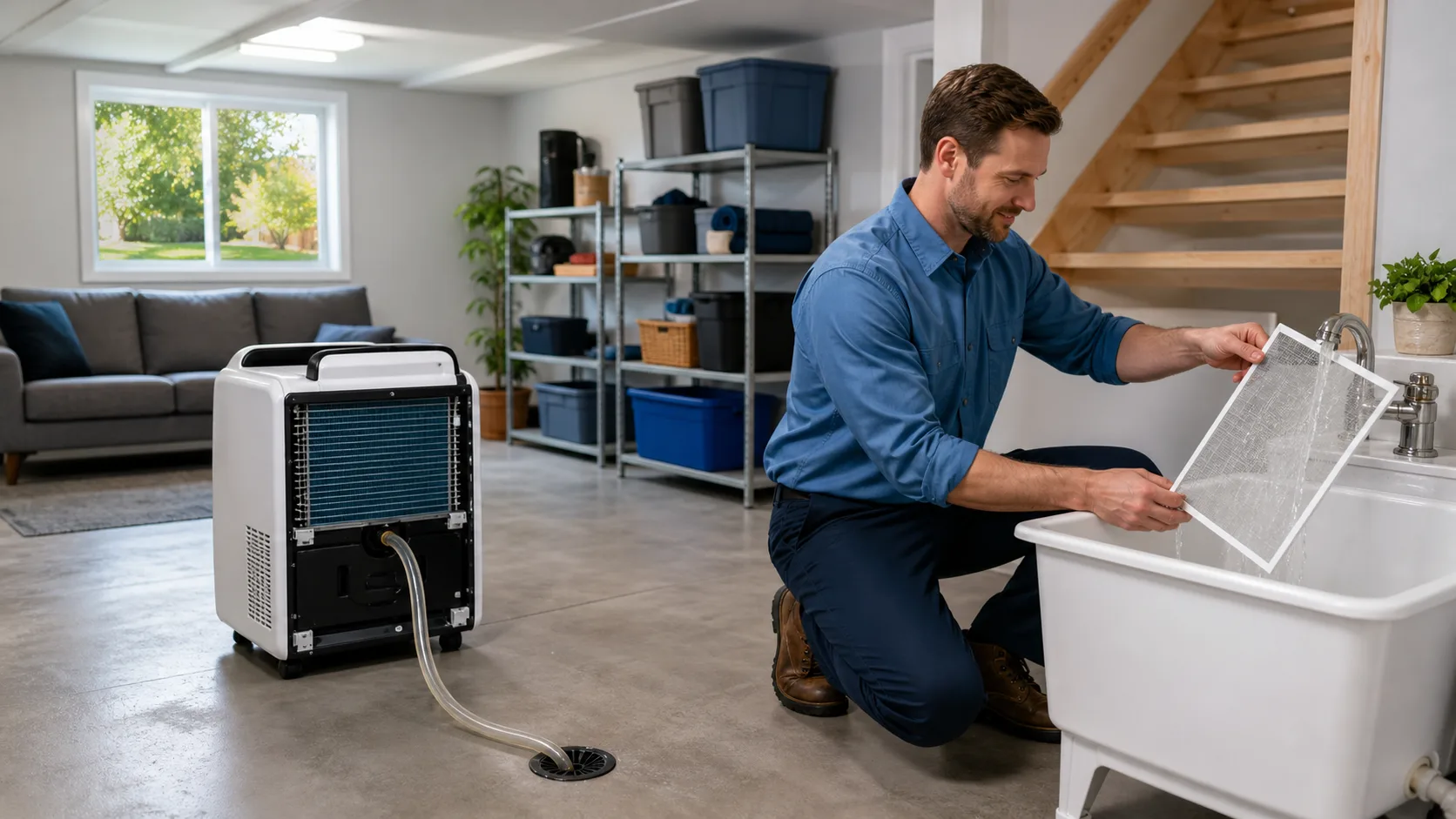
- Remove the filter and gently vacuum it, or wash it if the manufacturer allows
- Let the filter dry fully before you put it back in
- Wipe down the exterior surfaces and intake grilles to clear dust and pet hair
- Look at the coils for dirt, corrosion, or frost
A light layer of dust on easily reachable coils can sometimes be gently cleaned according to the owner’s manual. If you see heavy buildup, bent fins, oil stains, or repeated ice on the coils, it is safer to stop there and have a professional check it. At Neighborly Heating and Cooling, we pay close attention to details like refrigerant circuits, electrical connections, and drainage, and we keep your comfort and budget in mind while we work.
Stopping Mold and Mildew Before They Start
Mold loves damp, dark spots. A dehumidifier bucket that never gets cleaned, a dirty filter, or puddles around the unit can become mold and mildew hot spots. Once mold settles in, it can spread to nearby walls, carpets, and storage boxes.
A few simple habits can help keep mold away:
- Empty and rinse the collection bucket often, especially in late summer and early fall
- Disinfect the bucket and any removable parts with a mild cleaner that is safe for the unit
- Wipe any splashes or spills on the floor around the dehumidifier
- Keep a few inches of clearance around all sides so air can move freely
- Avoid tucking the unit into tight, dusty storage corners with poor air movement
Sometimes, trouble with a dehumidifier is a sign of a bigger moisture issue. Constant puddles on the floor, heavy wall staining, or strong musty odors may point to problems like foundation leaks, poor ventilation, or equipment that is the wrong size for the space. When that happens, it helps to have someone give you clear, straightforward guidance without pressure or upselling. That is how we approach every call.
Keeping Condensate Drains Clear and Leak-Free
Many dehumidifiers send water into a drain hose, floor drain, or small condensate pump instead of only using a bucket. When those hoses or pumps clog, water can end up on the floor, soaking stored items or finished basement materials. That can lead to smells, stains, and damage over time.
A practical drain check, especially heading into the cooler months, can save a lot of hassle later. Look over these basics:
- Inspect the drain hose or line for kinks, sagging, or visible clogs
- If the manufacturer allows, gently flush the hose with a mild cleaning solution to clear algae or slimy film
- Make sure the hose slopes down toward the drain, without long flat runs where water can sit
- Check that connections are snug so they will not pop off and leak
- If you have a condensate pump, listen while the unit runs for odd sounds, and see that the float moves freely and the discharge line is open
If you see rust, ongoing leaks, or the unit keeps shutting down or tripping a breaker, it is time for a licensed and insured HVAC professional to step in. That protects both your home and the equipment.
Seasonal Dehumidifier Tips for Michigan’s Fall and Winter
As outdoor temperatures drop, your humidity needs shift too. You do not want air so dry that your skin, throat, and sinuses feel rough, but you also do not want a cold, damp basement. The right balance often means a lower setting and shorter run times compared with the middle of summer.
Helpful seasonal tips include:
- Gradually adjust the humidity set point as the weather changes
- Pay attention to how the air feels, and watch for window condensation or static shocks as clues
- Consider moving the dehumidifier between levels of the home if one area stays more damp
- If you shut the unit down for winter, clean and dry the bucket, filter, and coils first, then store it covered in a dry spot
Your dehumidifier for the home works best as part of a bigger comfort picture. Along with your furnace, any air cleaners or humidifiers, and proper ventilation, it helps keep your home feeling steady and comfortable through Michigan’s changing seasons.
At Neighborly Heating and Cooling, we hold a Mechanical Contractors License and carry full insurance, and we handle permits for HVAC-related installs so you do not have to deal with that extra step. We also provide free estimates by email through HCPs, and we accept Cash, Personal Check, Visa, MasterCard, and Discover. Callers speak directly with the owner, and our focus is always on integrity, clear communication, attention to detail, and “Providing Service You Can Trust.”
Breathe Easier At Home With Customized Dehumidifier Solutions
If your home feels damp, musty, or uncomfortable, we can help you choose the right dehumidifier for the home that fits your space and budget. At Neighborly Heating and Cooling, we assess your indoor air quality and recommend tailored options so you get lasting comfort, not just a quick fix. Ready to get started or have questions about what size or type you need? Simply contact us and our team will walk you through the next steps.
Written by Ron Maggard